Setsubun
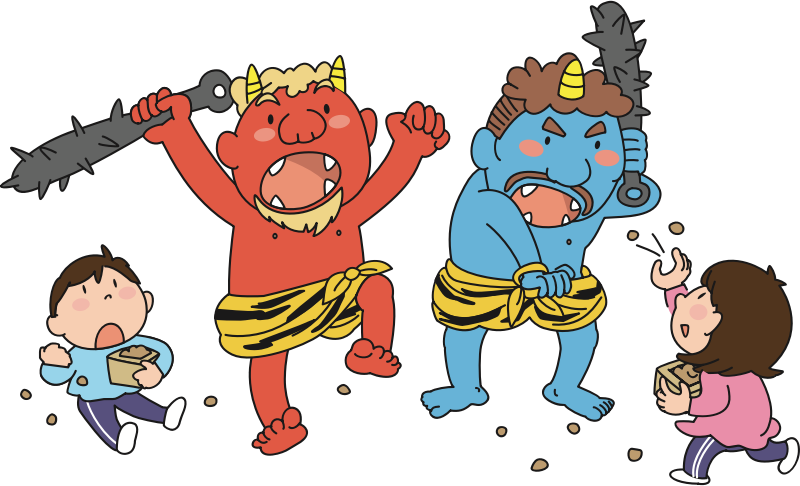
The Mark of the Arrival of Spring in Japan
As winter draws to a close in Japan, families across the country prepare to celebrate 節分 (Setsubun), a traditional event held on February 3rd that symbolizes the arrival of spring and the renewal of good fortune.
Following the New Year season, marked by house cleanings, shrine visits, and traditional foods such as おせち料理 (osechi ryōri), Setsubun offers another opportunity for spiritual cleansing. The holiday centers on the removal of misfortune and negative spirits known as 鬼 (oni), which is commonly translated as demons or ogres.
The term Setsubun refers to the division between seasons in the traditional calendar. Celebrated on the day before 立春 (Risshun), the official start of spring, the custom traces its roots to ancient Chinese beliefs that seasonal changes could bring illness or disaster. These ideas were introduced to Japan during the Heian and Muromachi periods (1336–1573) through court rituals known as Tsuina and later became a widespread cultural practice.
Rituals of the Setsubun
The most recognizable Setsubun tradition is 豆まき (mame-maki), or bean throwing. During the ritual, roasted soybeans are thrown out the front door or at a family member wearing an oni mask while participants chant, “鬼は外!福は内!” (Oni wa soto! Fuku wa uchi!), meaning “Demons out! Fortune in!” Each person then eats the same number of beans as their age to ensure health and good luck.
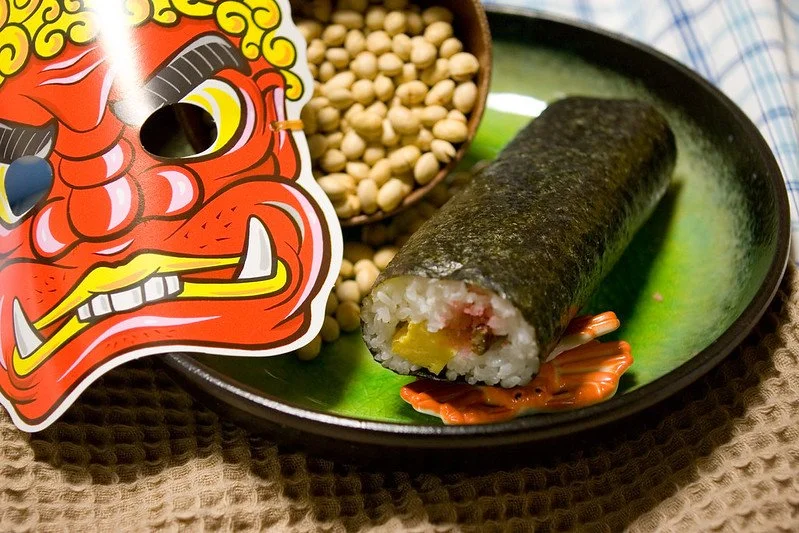
Pan-heated soybeans and Eho-maki (Lit. "lucky direction roll") (photo by sakura chihaya)
Many families also observe the custom of eating 恵方巻き (ehō-maki), a sushi roll consumed silently while facing the year’s lucky direction, determined by the Chinese zodiac. Filled with seven ingredients representing the Seven Gods of Good Fortune, the roll is believed to bring prosperity. Though now popular nationwide, the tradition is said to have originated in Japan’s Kansai region.
By combining ritual, symbolism, and family participation, Setsubun continues to mark the transition into spring while celebrating hope, renewal, and good fortune.